
Applied computing
Applied Computer Science master's education at the University of Winnipeg and a Computer Science bachelor's degree from Amirkabir University of Technology.
About Noshva
Noshva is an independent, founder-built product designed and engineered by Mahsa Sadeghi in Winnipeg. It connects the QR moment guests already understand with focused staff actions and practical owner visibility.
Mahsa Sadeghi
Founder · Product designer · Software engineer
From MenuCraft to Noshva
MenuCraft proved the complete digital-menu loop: owners could manage a public menu and share it through a QR-ready link. Building that product exposed a wider opportunity—what should happen after the menu opens?
A full-stack project covering restaurant profiles, menu sections and dishes, a customer-facing menu, authentication, and QR-ready sharing.
The QR could be more than a menu link. It could become a stable restaurant entry point—without trying to replace ordering, payment, or the POS.
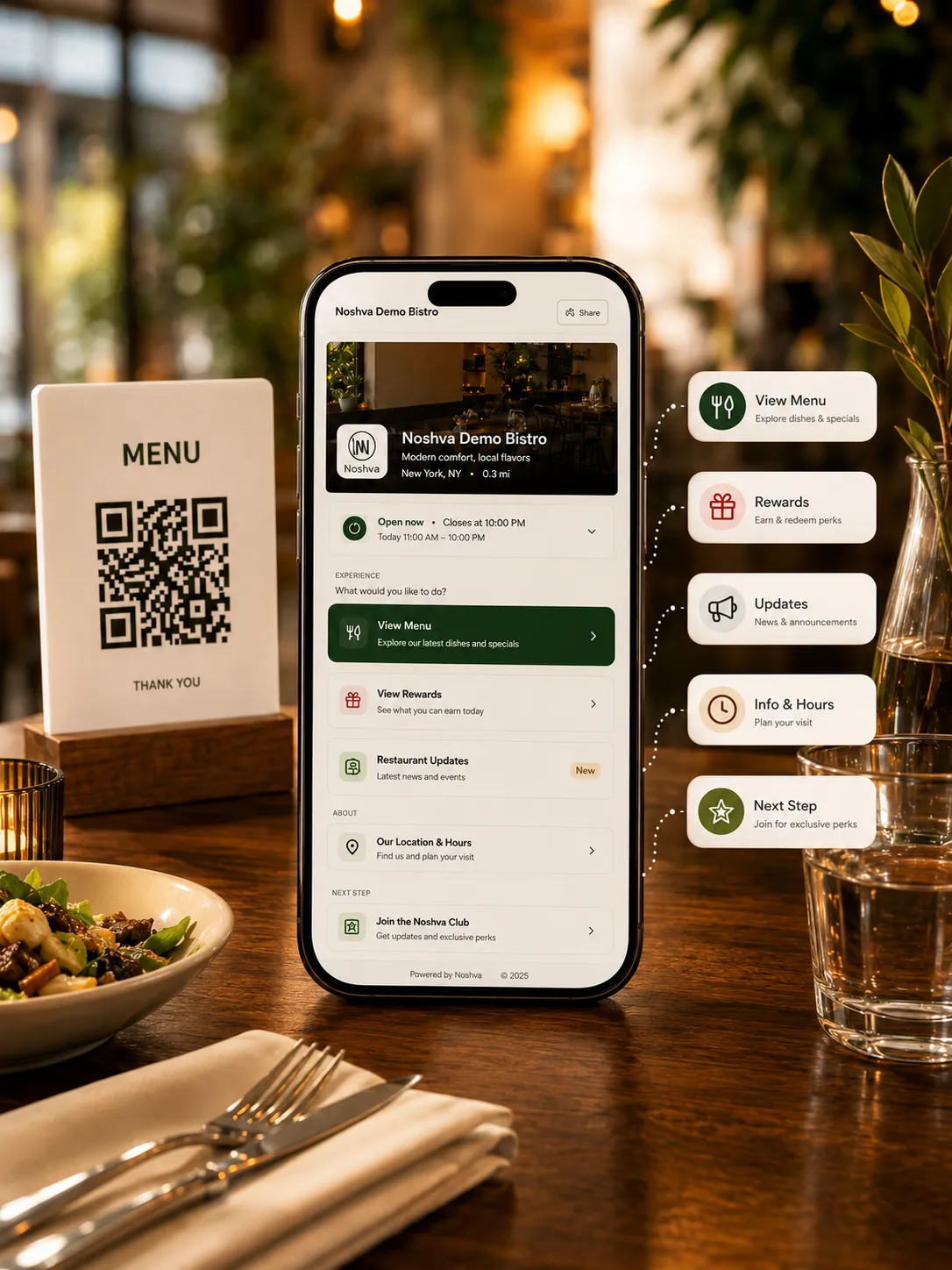
The idea grew into connected guest, staff, and owner surfaces: QR Landing, Menu, Rewards, Staff Rewards, and aggregate product visibility.
MenuCraft product capture
Reserved for an approved dashboard or public-menu screenshot.
Menu opens
The original loop
Relationship continues
The Noshva direction
noshva
One restaurant context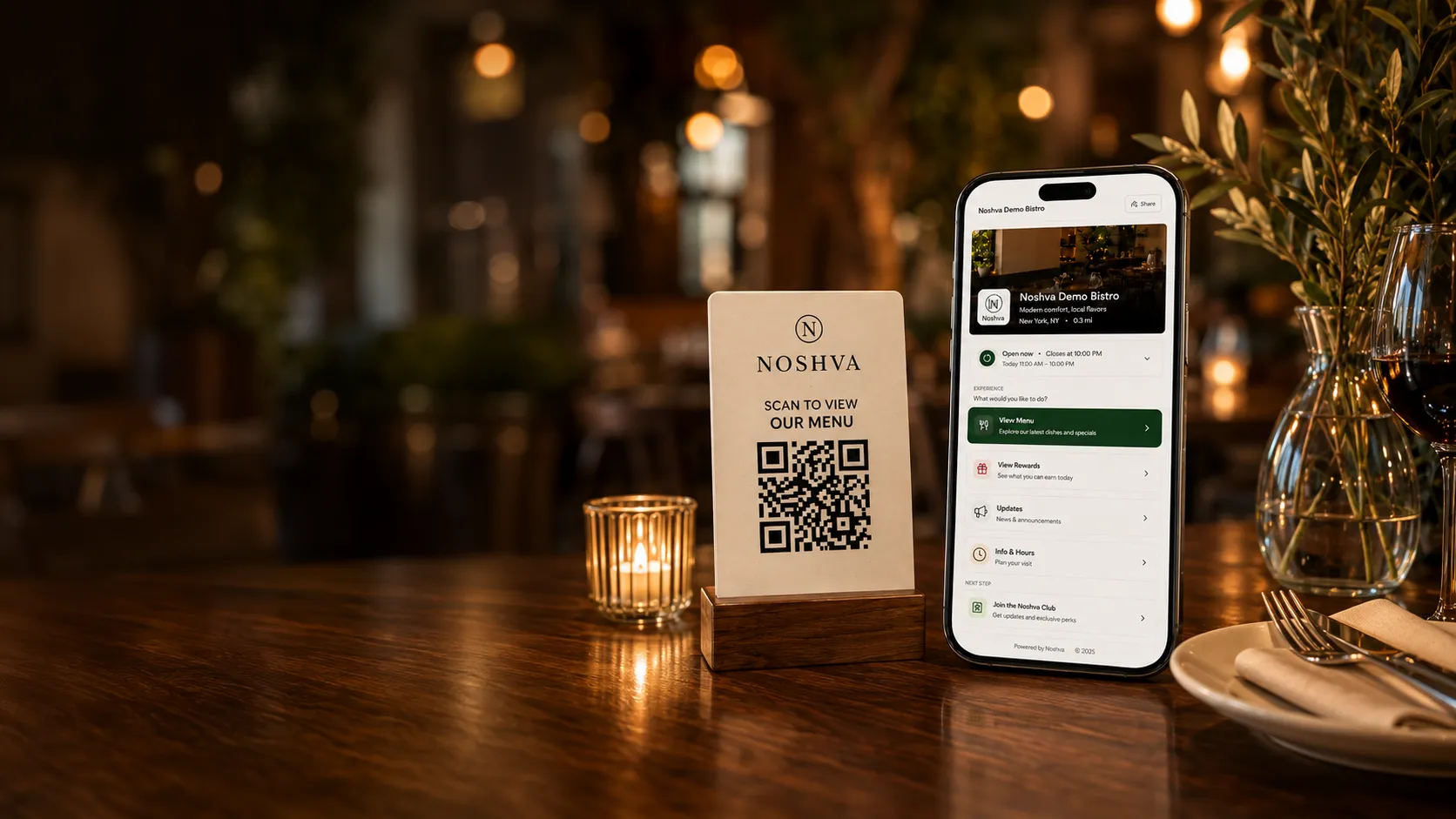
Guest
QR Landing, Menu, and Rewards
Staff
Focused, authorized actions
Owner
Aggregate product visibility
Mahsa Sadeghi
Founder · Product designer · Software engineer
Meet the builder
Mahsa is a full-stack software engineer and product designer based in Winnipeg. Her background combines application development, UI/UX design, applied computing, and research—useful disciplines for building a product that must feel simple on the surface and remain careful underneath.
Noshva is operated by Noshva Technologies Inc., a Manitoba corporation.
Applied Computer Science master's education at the University of Winnipeg and a Computer Science bachelor's degree from Amirkabir University of Technology.
Senior Research Assistant experience applying algorithms, modeling, data analysis, and technical documentation.
Next.js, React, TypeScript, secure server boundaries, Firebase, validation, responsive systems, and production workflows.
Application-development and UI/UX experience shaping customer-facing surfaces and operational tools.
Noshva moved from product framing through architecture, implementation, responsive QA, security review, and Pilot preparation over roughly three months.
How Noshva was built
Mahsa used AI-assisted development tools, including OpenAI Codex, to accelerate code exploration, implementation, review, and repetitive engineering work. Product decisions, architecture, security boundaries, testing, and final responsibility remained human-owned.
Transparent tool use is more credible than pretending modern engineering happened without assistance—or implying the product was simply generated by AI.
01 · Frame
Start with the guest, staff, or owner task. Define the product truth and boundary before implementation begins.
02 · Delegate
Use repository context, explicit constraints, and bounded tasks to accelerate changes—not to outsource product judgment.
03 · Verify
Review diffs, run targeted checks, test responsive flows, and verify authorization and data boundaries before accepting work.
04 · Refine
Move through real product journeys repeatedly: guest access, staff action, owner review, failure state, and recovery.
task: refine a focused restaurant workflow
constraints: product truth · authorization · typed data · accessible UI
inspect: callers · route guards · validation · error states
test: unit · integration · responsive · reduced motion
decision: accept, revise, or reject the generated change
AI can increase engineering throughput. It does not replace accountability.
What guides Noshva
Noshva aims to make the guest moment simpler, the staff action clearer, and the owner view more useful—without pretending to replace the restaurant's core systems.
01 · Guest
Public pages should help immediately, without an app install or an unnecessary account wall.
02 · Staff
Daily Rewards work stays direct, authorized, and separated from the public guest experience.
03 · Owner
Show aggregate product activity without turning it into unsupported sales, revenue, or identity claims.
04 · System
Add a guest-and-Rewards layer without claiming to replace ordering, payments, or the transaction system.
05 · Rollout
Restaurant access begins with a deliberate Pilot review and guided approved setup.
See the product behind the story
Open the Demo to experience the guest journey, or request a reviewed Pilot conversation for your restaurant.